

Phillies 2026 MLB Draft: Final Thoughts
Another year of the MLB Draft has come and gone. Some final thoughts:

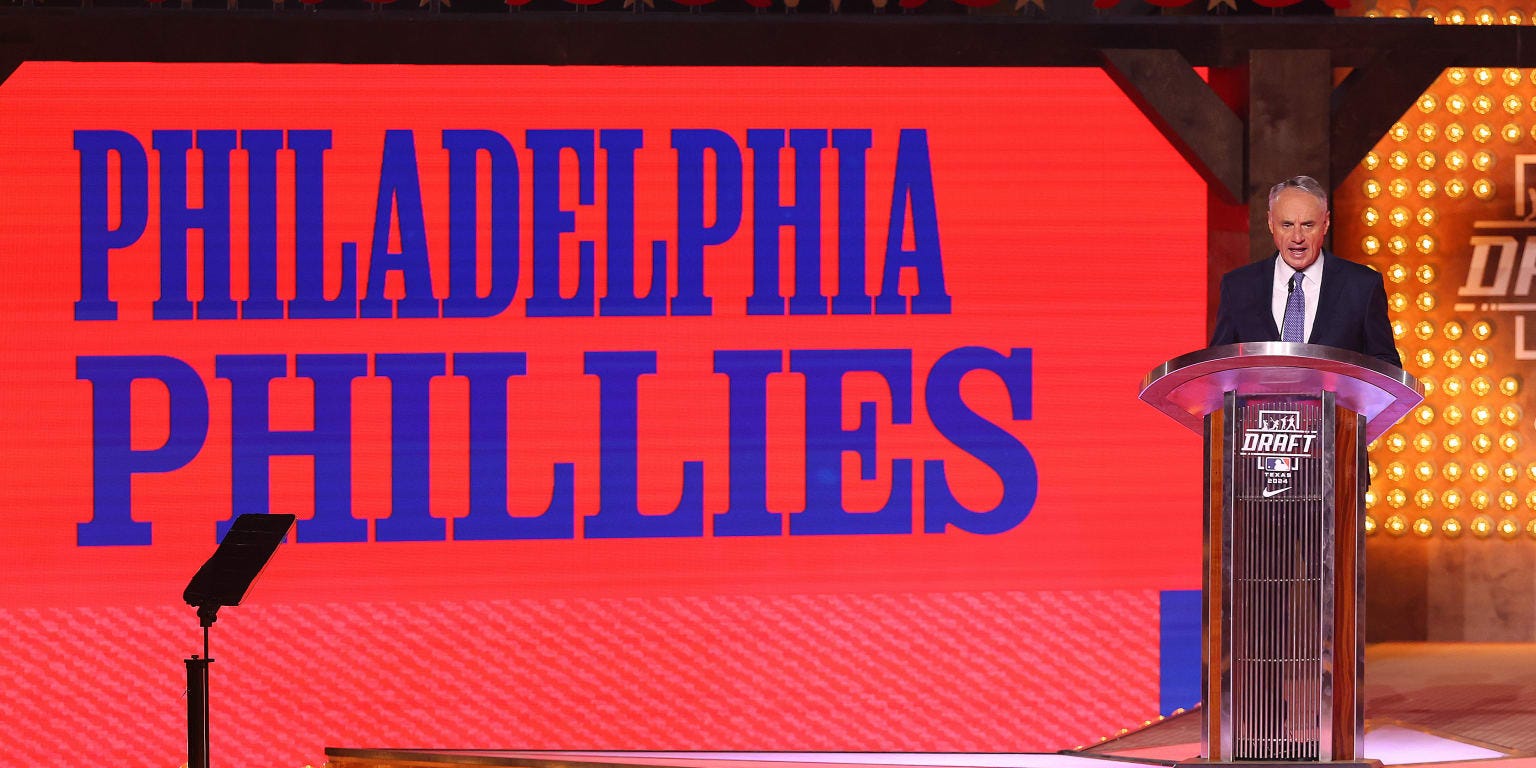
To me, there is nothing better than the MLB Draft.
I love everything about it. There is just something about watching these kids’ lifelong dreams come true that is utterly inspiring. Plus, we get to learn about an entirely new crop of Phillies prospects!
This year’s draft was a very, very different one from the Phillies — the main thesis of which is this:
When it comes to pitching, the Phillies have a type.
When it comes to hitting, the Phillies… do not.
Pitching-wise, the Phillies clearly target fastball traits and low release heights. I think the organization has enough confidence in their ability to develop breaking and offspeed offerings that, in targeting outlier fastballs, they feel they have the best chance to develop an arm — and I don’t blame them!
Take for example RHP Ramon Marquez, who is flourishing under the Phillies’ watch after signing for just $10,000 out of Mexico. He came to the Phillies extremely raw, and at the age of 20 years old now has one of the best offspeed offerings in Minor League Baseball in his changeup. He may very well be the second-best pitching prospect in the Phillies’ system.
When it comes to hitting, however, the Phillies still very much lack identity as an organization.
They’ve tried the speedy, toolsy, and in some cases contact-first outfielder — a trend that was seemingly forecasted by the team’s first round selection of Justin Crawford in 2022. In 2024, the Phillies drafted all of Dante Nori, Griffin Burkholder and John Spikerman consecutively, only to have each of them stumble to find their footing (though there are cases to be made for both Nori and Burkholder that they are better than their current seasons suggest.)
This year, it was sheer raw power bats that hit the ball directly into the ground, a draft trend that was somewhat preempted by the team’s selection of Gabriel Rincones Jr. in the third round of their 2022 draft. The Phillies have yet to successfully prove that they can develop this kind of bat, though to their credit, Gabriel Rincones Jr. is lifting the ball more consistently than he was when he entered the organization.
Obviously, one player making one adjustment does not a formula make, but you can somewhat see why the team feels some semblance of confidence that they can replicate the trend.
Worth noting — the Phillies also targeted what you would call “barrel magnets” outside of the first five rounds; hitters with good bat control and bat speed that don’t whiff a lot in-zone. This trend is a newer one for the Phillies, and one that feels a bit more “new-age-y” than their strategies of years past.
Let’s talk some 2026 Draft Class, shall we?
The Overall Grade: B
I’m pretty sure the Phillies dug into my Out of the Park Baseball files and siphoned this draft class directly from there — because this is bar for bar the type of strategy I would string together in that game.
The Phillies went upside hunting, and returned with a swath of ceiling. Whether or not they can get the most out of that ceiling is another question.
Tyler Spangler was a great first pick on paper, and exceedingly reminiscent of the organization’s selection of Aidan Miller in 2024. Miller fell to 27th overall because of a hamate injury, which the Phillies seemed completely unconcerned about — and they were right to be. Spangler’s undoing was a back injury that prevented him from participating in his senior year season, but again, an injury that the Phillies seem to have little long-term concern about. Spangler already has plus tools across the board, with room to grow.
The Phillies also selected a profile of player they’ve really never selected before… twice… with the likes of OF Caden Bogenpohl (64) and Will Gasparino (161). Two mountainous men, both Bogenpohl and Gasparino stand at 6’6”, and boast immense raw power. The latter of the two has a louder toolset, but the former has some of the most immense raw power I can recall in a prospect. Each come with substantial hit tool concerns, and honestly, I’m not sure I see them flourishing under the Phillies’ thusfar lackluster hitting development. That said, they are both bats to dream on, and true athletic outliers.
I am curious to see what the Phillies choose to do with fourth rounder, Deven Sheerin. Based on where they selected him, I would assume they’re going to give him a shot out of the rotation — which will be difficult given his effortful delivery. Perhaps they see a way to smooth it out while still retaining his low arm slot?
Overall, from a talent perspective, I’d give the Phillies an easy A — maybe even an A+. There is some monumental ceiling in this draft class.
That said, I gave the Phillies a B grade overall, primarily because I don’t think they played to their strengths with their biggest risk picks. There seems to be an organization-wide delusion that the Phillies’ hitting development is better than it is — and while it has improved as the years have gone on, the Phillies drafted like they’re one of the more optimized hitting orgs in the league.
Brian Barber and the Phillies went heavy on bats in both 2023 and 2024 — they were burned badly. Devin Saltiban, TJayy Walton, John Spikerman, Carter Mathison… all exciting draft talents, all picked within the first five rounds of their respective drafts, and all of which have been relative trainwrecks in pro ball.
I’m not saying the big-risk hitters of this year’s draft class are going to fall victim to the same fate, but it just doesn’t feel like a great player/org fit yet.
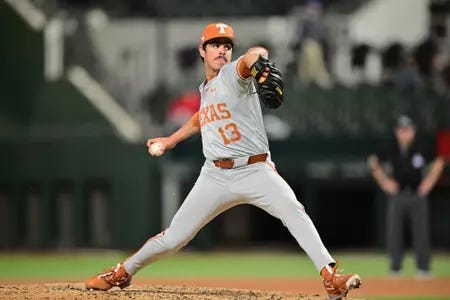
Favorite Pick: Round 3 - RHP Ruger Riojas
I was elated when the Phillies called Riojas’ name with the 100th overall selection of the draft.
The best senior on the draft board, Riojas offers a high-IVB heater and excellent splitter, a devastating combination which helped him see a massive upswing in K% this season. Riojas also historically pounded the strikezone in college, never turning in a walks-per-nine north of 2.7 throughout his entire collegiate career. Ruger is a dog on the mound, and he has the stuff to back it up. The righty struck out 120 batters across 81.2 innings this season at Texas. He’s going to move quickly thanks to his advanced ability to command the baseball. The Phillies will need to help him develop a better breaking ball, and if they can do that, the forecast on Riojas’ ceiling certainly changes.
Don’t get me wrong, Riojas probably won’t develop into a front-of-the-line rotation option — but he has a high floor, and the ceiling of an eventual three or four.
The thing I liked most about this pick is that it immediately shored up the Phillies’ Major League pitching depth. Riojas won’t reach the majors tomorrow, but he’s likely going to make an impact in the next year-and-a-half or so. Looking ahead to Autumn of 2027, you can start to see the vision a bit; all of Gage Wood, Ramon Marquez, Cade Obermueller, and yes, Riojas, will likely be near-MLB-ready — with names like Matthew Fisher to follow. It’s a big shift from where they were.
It’s not that I didn’t like the Phillies’ first two selections of Tyler Spangler and Caden Bogenpohl — I did. I just think that, developmentally and from an org-fit perspective, this selection made the most sense for the Phillies. It’s the biggest slam dunk of their draft.
Least Favorite Pick: Round 4c - RHP Jaxon Jelkin
Here’s the deal:
On the day of the draft, I said I liked this pick — and while that remains true from a baseball perspective, the concerns that evaluators had about Jelkin’s makeup made me pump the brakes upon reflection.
At a glance, Jelkin would make you think you’re getting outstanding bang-for-your-buck in the fourth round. He touts above-average stuff across the board, he pounds the strikezone, and he’s shown he can stick in a professional rotation. It feels like a no-brainer, but the fact remains; in order to succeed at the MLB level, you have to be coachable, you have to be a good teammate, and to succeed in Philadelphia, you have to be a good human — or you’re going to hear it.
I can’t speak much to Jelkin’s off-field issues, but I do hope that the Phillies make it a priority to straighten things out. The culture that this team has built in the Minor Leagues is second-to-none, and the last thing you’d want to do is disrupt that.
I’m sure the organization took everything into consideration when deciding to draft the nearly 24-year-old starter, but Jelkin’s early dismissal from Nebraska certainly gives reason for pause.
The Sleepers:
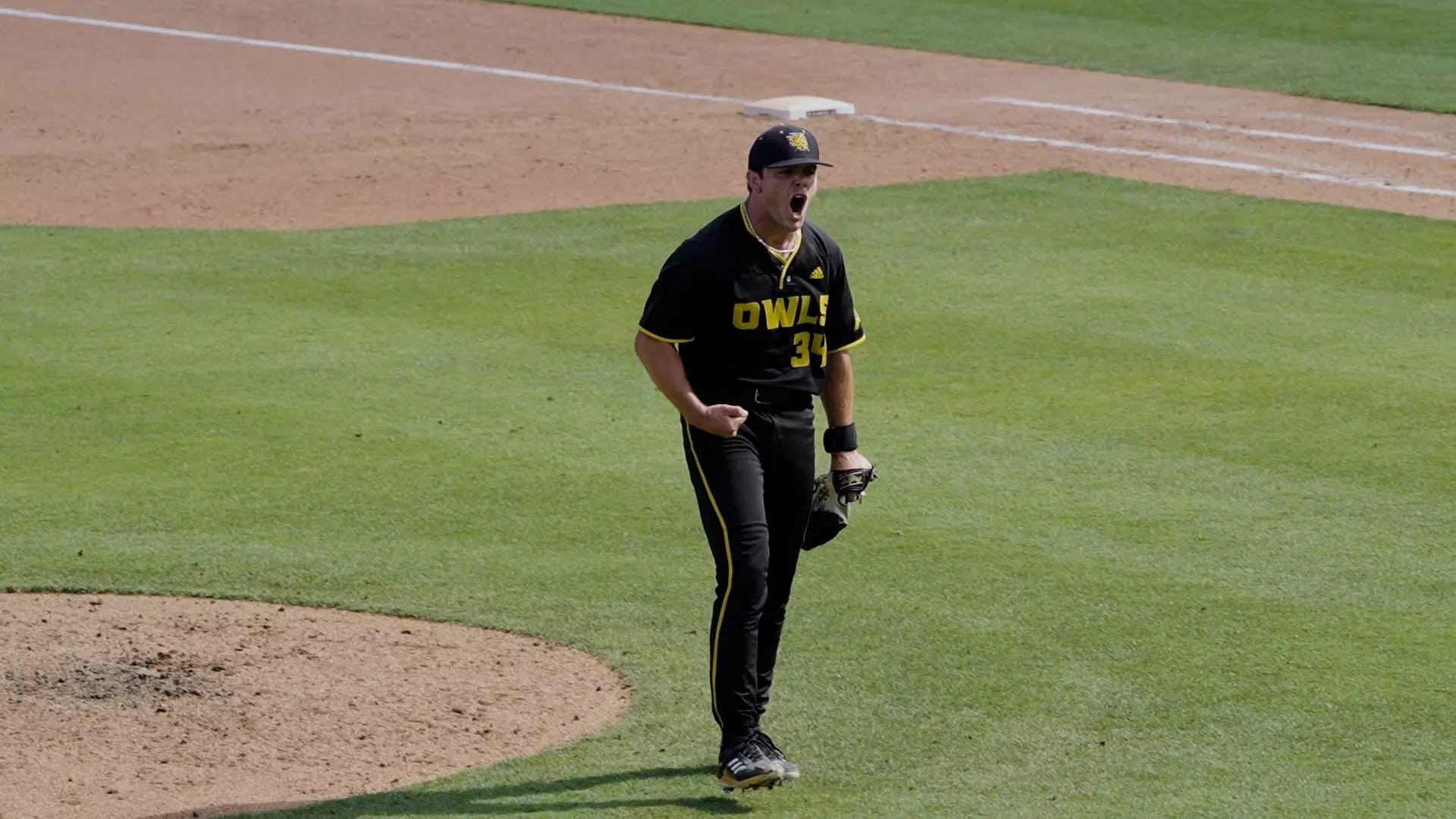
RHP Bo Rhudy - Round 7 (219)
Rhudy had one of the best fastballs in the draft, and I think he’ll be the quickest mover in this entire draft class. This pick is extremely reminiscent of the Phillies’ selection of Orion Kerkering back in the fifth round of the 2022 draft — but with a far higher floor, and not nearly as much secondary praise.
Rhudy dots his pitches. He walked just SIX batters across 32 innings of relief with the Vols this year. Heck, he walked 25 batters across his entire college career. The real question here is velocity. Currently, the righty sits in the low-90’s, but Rhudy has a metric ton of projectability in his frame (6’4”, 220 lbs) so an uptick shouldn’t be hard to find. If he can manage it, you might be looking at one of the more unhittable fastballs in Minor League Baseball.
He needs a secondary pitch, the slider doesn’t strike me as good enough as of right now, but it could play up as he gains velo, or if he added a cutter/something that tunnels more effectively with it.
If the control holds and he finds the extra speed, you’re looking at a late-inning reliever at the Major League level — no question.
SS Reece Moroney - Round 10 (309)
I wasn’t entirely familiar with Reece Moroney on Draft Day. I remember seeing his name a year or two ago as a sell-out-for-contact type of bat with smooth fielding skills, and almost immediately wrote him off as an “org guy.”
Then, I was approached by a couple of folks in some circles I swim in that lauded the Phillies for netting a bat of Moroney’s caliber at 309th overall, and I dug a little deeper.
It turns out, this season Moroney saw some huge upticks from an exit velocity perspective this season, all thanks to a bit more of an aggressive approach at the plate.
He’s a gap-to-gap guy — you’re not going to find a lot of home runs here — but Moroney is also a barrel hunter, and has quick hands with great bat control. He walked far less this year at Rhode Island, and saw no increase in strikeout percentage. He’s never really been one to whiff in-zone anyway, though he will chase.
I see the vision. If you can convince Moroney to use his pull-side a bit more, you could see an eventual 10-12 home runs per season here, alongside his gap-power threat. I would say the ceiling is that of a utility infielder at the MLB level — but there could be more. He is a really good hitter, the only question is if the power increase will continue to play with wood bats.
OF Brayden Bakes - Round 13 (399)
I’ll be the first to admit that I fall for this kind of profile a lot. Bakes had the season of his life at Illinois State, slashing .393/.482/.709 with 16 home runs. Yeah, that’s gonna get you drafted.
The reason I like Bakes so much is that he’s already so in-tune with his lower half. He’s undersized (5’9”) but generates all of his power from his legs. He showed excellent discipline at ISU, striking out just 65 times in his college career across 103 games — and he optimized his swing decisions big time in 2026. He was in real consideration for Missouri Valley Conference Player of the Year — but Atlanta Braves first rounder Carter Beck ended up with the honor.
The only real question here is competition. The MVC has produced Major Leaguers like Luke Voit, Jake Burger and Mike Tauchman — and for my Phillies sickos out there both Darick Hall AND Darin Ruf — but it isn’t exactly the SEC. That, plus Bakes posted an extraordinarily high BABIP this season, leading to some questions about whether his impact increase was real.
If it weren’t for his recent breakout and stature, you’d probably be seeing Bakes go in the first five rounds. I think the Phillies did really well here value-wise.
RHP Justin Lee - Round 20 (609)
I’ll be perfectly honest, this is a purely speculative pick on my part — I don’t have any real reason to believe Justin Lee will be a sleeper pick of this draft… I just kind of feel it.
Lee was a hugely touted high school prospect with first round buzz in 2023. He ended up going unselected due to signability concerns, and saw his commitment to UCLA through. Unfortunately, his command evaporated overnight there.
I’m not sure he’ll sign, but if he does, the Phillies have a lot of work to do here. Lee touches triple digits, but showed almost no command aptitude whatsoever in college. He let the ball leak out over the middle of the plate far too often, and was almost always punished for it. He walked 65 batters across 90.2 innings at UCLA, and struck out just 94 hitters. He was borderline unplayable — until his 2026 season, where he saw mostly low-leverage spots out of the bullpen, and turned in a 3.26 ERA (though he posted an absurd 2.8 HR/9, alongside a 1.29 WHIP.)
If they can convince him to sign, this is exactly the type of risk you want to see your team take in the 20th round.
Thus concludes another Phillies Draft. It was fun while it lasted. Let’s do it again same time next year, shall we?
Author’s Note:
Folks, I’ve officially got the bug. There is so much more content coming your way in the next few weeks — trade deadline stuff, A revised top 33 prospects list, and much, much more. Make sure you’re subscribed to stay up to date, and as always, thank you endlessly for reading!
Really dislike the Jelkin pick, wish they picked Cuvet or Bears